Kennedy-Douglass Center for the Arts
EXHIBITS 2026
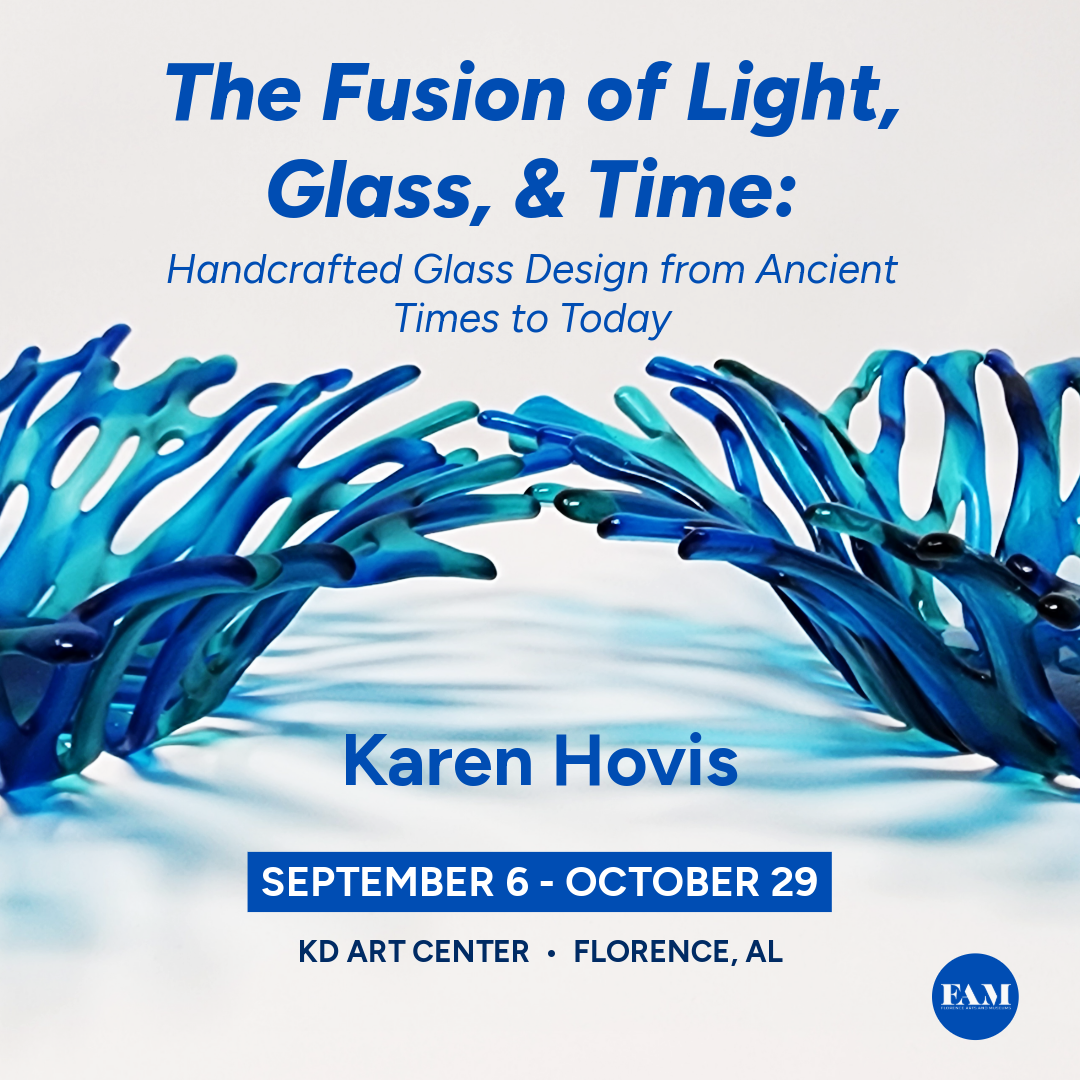
The Fusion of Light, Glass, & Time: Handcrafted Glass Design from Ancient Times to Today - by Karen Hovis
9.6.26 - 10.29.26
The Kennedy-Douglass Center for the Arts is pleased to present the fused glass artworks of Brasstown, North Carolina artisan, Karen Hovis, beginning September 6 and continuing through October 29, 2026. Her stunning glass sculptures showcase her mastery of various techniques, creating unique pieces that captivate with their interplay of light and glass.
Please join us for a “Meet & Greet” opportunity with the artist that will be held on Sun., September 20 from 2-4 p.m. at the KDAC. This event is free and open to the public; all ages are welcome.
Karen is a fused glass artist who creates kiln formed glass pieces using techniques of fusing, draping, dropping, slumping, and pulling of glass in its various forms of powder, frit, and sheet. Glass, and the beautiful dance that is created when light touches it, has always mesmerized Karen. She began her journey with fusing in 2005 in Martin County, Florida. Numerous courses and years of study, along with trial and error, have taken Karen from Florida, to Georgia, and finally to North Carolina. She has had the pleasure of learning personally from many well-established glass artists.
In 2017 she retired from the insurance world and now has more time to follow her passion. Karen is a student at heart and thrives on trying new techniques and methods. As a former teacher, she loves to explain to others how each piece is created.
Karen is a member of the prestigious Southern Highland Craft Guild that includes artisans from over nine states: https://southernhighlandguild.org/about/. She was recently honored to have one of her pieces chosen for viewing in Washington D.C. at the Appalachian Regional Commission Office. Karen’s studio is located in Brasstown North Carolina. To learn more about Karen, visit her website: https://timetofuse.com/
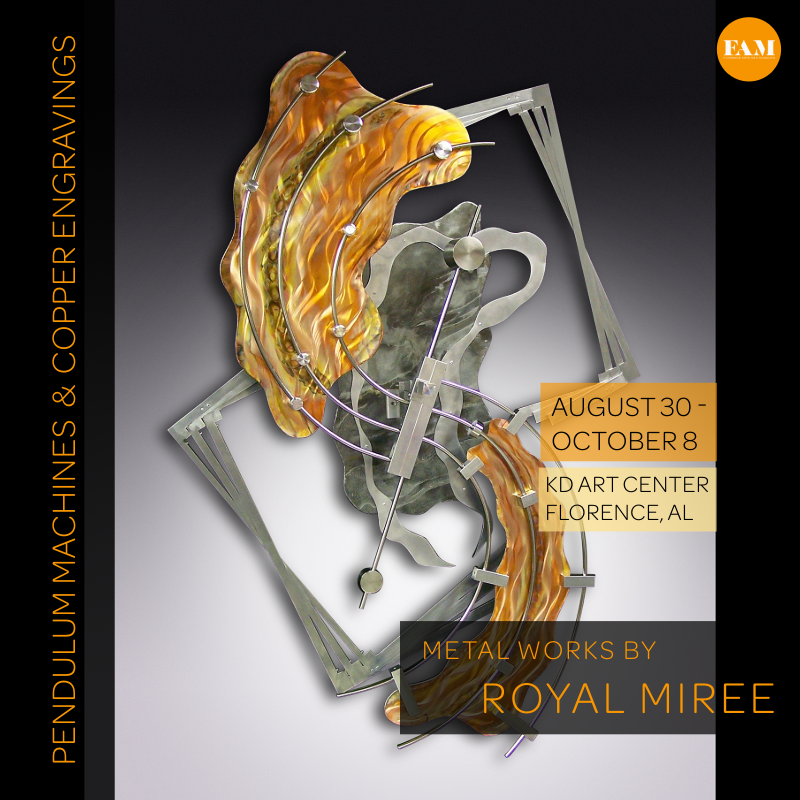
Pendulum Machines & Copper Engravings: metal works by Royal Miree
8.30.26 - 10.8.26
The Kennedy-Douglass Center for the Arts is pleased to present the dynamic metal works of Birmingham artist, Royal Miree, beginning August 30 and continuing through October 8, 2026.
Royal has been sculpting for over thirty years—an art form he began exploring in junior high school under the instruction of Edward Lee Hendricks—Royal has only ever met two other people who work with metal in the way that he does, which is why his works are so unique. Royal explains that he makes “hand-fabricated metal works. The sculptures are interactive pieces based on pendulum movement.” The works are interactive in that they must be touched in order for the movement to occur: They are entirely kinetic, requiring no electronic technology to keep the movement going. The sculptures are based on balance, and Royal creates all the parts and pieces by hand with newly purchased raw materials. Most of them are his own ideas, and many are inspired by events throughout history—certain pieces can be seen as clues that add up to create a bigger picture or event.
The displayed sculptures at the KDAC are about 4-6 feet in width and each can weigh about 40 pounds or more. It may seem that the larger objects would take longer to create, however, according to Royal, the intricacy of the design determines the amount of time it will take to make the piece from beginning to end. “If there are a lot of parts and pieces, you have to engineer all those pieces. It could be a small piece of jewelry and still take a long time because of all the components,” Royal says.
Royal’s exhibit will include some of his “Pendulum Machines,” elaborate copper engravings, and a number of metal wall quilts—with each work exhibiting his unique style. For more information and videos about Royal’s work, visit his website: www.royalmiree.com
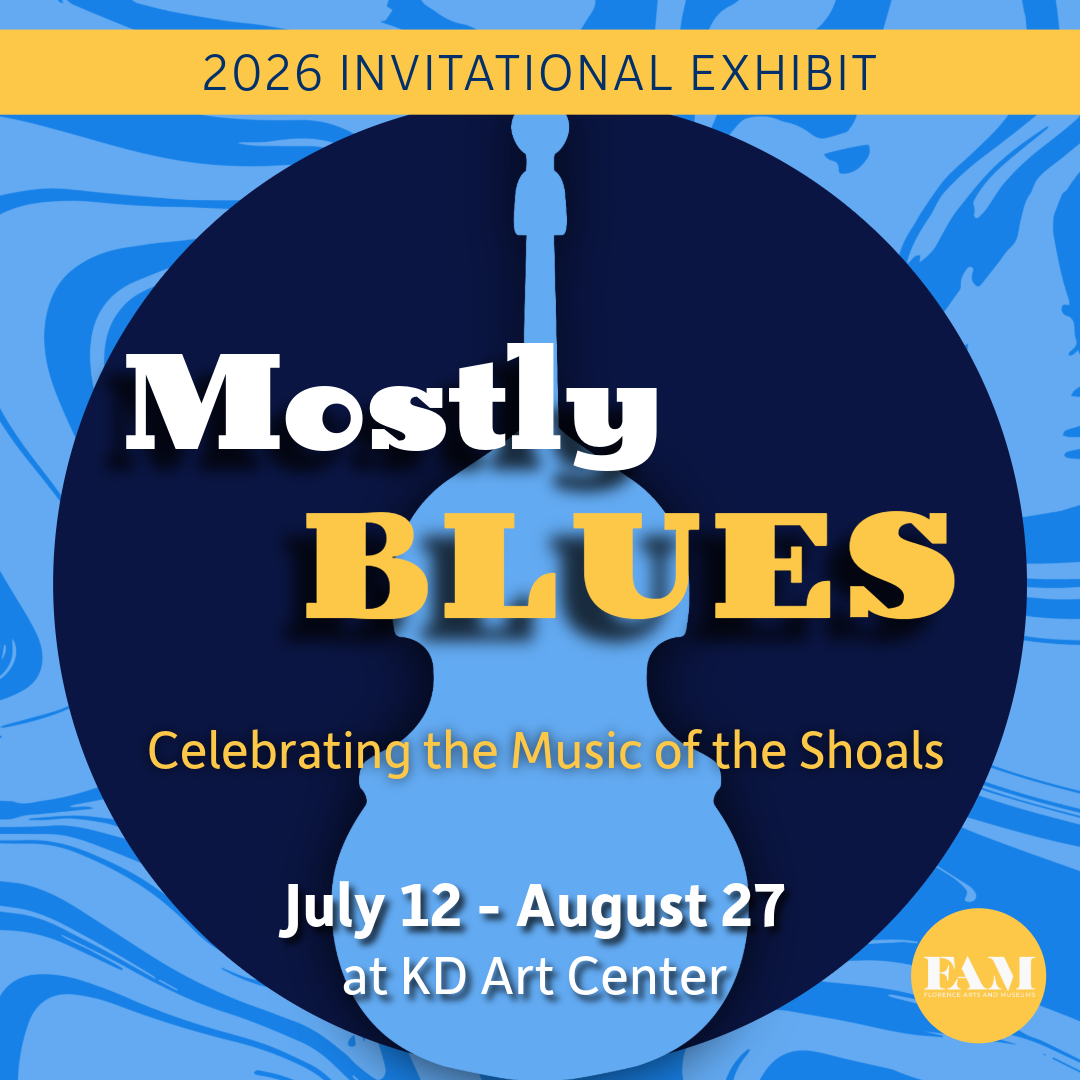
Mostly Blues Invitation Exhibit 2026
7.12.26 - 8.27.26
The Kennedy-Douglass Center for the Arts is pleased to present Mostly Blues, an annual soulful exhibition of paintings, drawings, photographs, sculptures, and mixed media works by regional artists that visually interpret and pay homage to the power of music. While invited artists from Colbert, Franklin, and Lauderdale counties have diverse interpretations—whether depicting a scene from the W.C. Handy Music Festival or literally painting in ‘blues’—all works have a common musical theme that celebrate this area’s ties to the music world. A reception is planned for Sunday, July 19, 1-4 p.m., with an awards presentation that is to be held at 1:30 p.m.
The Mostly Blues exhibit was started in 1994 to honor Florence native W.C. Handy, “Father of the Blues”. Since then, the music-themed display has become apopular summer highlight! The KDAC again looks forward to this opportunity to exhibit the soulful collection of art by not only well-known and established areaartists—but also by new, up-and-coming artists as well. This visual homage to the power of music will open on July 12 and remain on display through August 27, 2026.
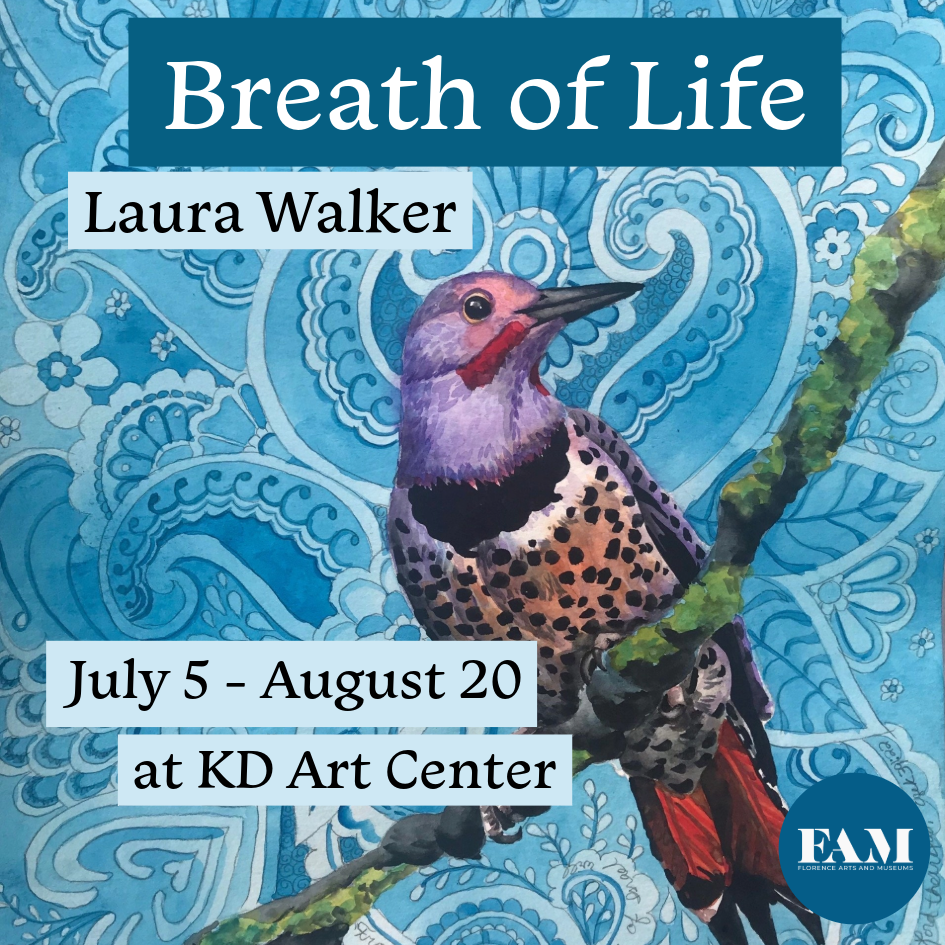
Breath of Life: watercolors by Laura Walker
7.5.26 - 8.23.26
The Kennedy-Douglass Center for the Arts is pleased to present a watercolor exhibition, “Breath of Life” by Cullman, Alabama artist Laura Walker beginning July 5, 2026, and continuing through August 20, 2026. A reception will be held on Sun., July 19, 2-4 p.m. in conjunction with the “Mostly Blues” Invitational exhibit. This series of watercolor paintings explore the symbolism of animals and their meanings to the people who see them. Please join us that afternoon for a‘Meet & Greet’ opportunity with Laura Walker and learn more about her artwork and her creative process!
Of her background, Walker shares, "I have always been visually creative. When my children were little, I taught art classes and managed an art studio in Cullman, AL. Realizing I enjoyed making my own art more than I enjoyed teaching, I phased out of teaching by doing custom portraits of people, pets, and homes. Eventually I started doing art festivals and gallery shows throughout the Southeast, which I did for a decade. Now that my children are grown, I am traveling farther to get my art into top national art fairs. I do art with emotion, art with meaning, and art with a soul."
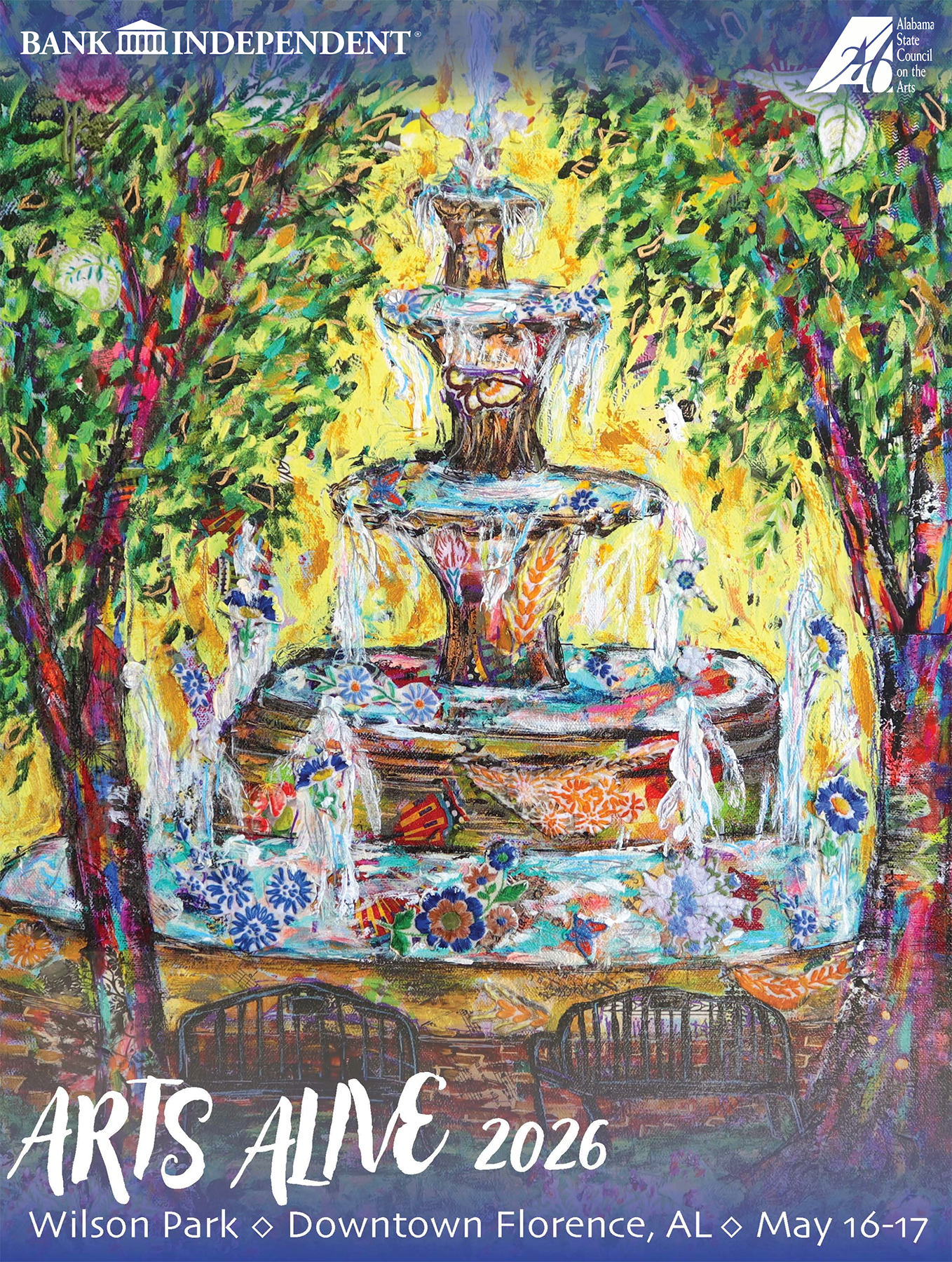
ARTS ALIVE 2026
5.15.26 - 6.26.26
Arts Alive 2026 will take place in Wilson Park in downtown Florence, Alabama the weekend of May 16th & 17th. The festival hours will be Saturday from 9 am to 5 pm and Sunday from 10 am to 4 pm. Local, regional, and national artists will sell original works in the park. Kennedy-Douglass Center for the Arts will showcase a gallery exhibit in conjunction with the festival from May 16th through June 26th.
Arts Alive is fun for the whole family! Browse the park for your next artwork purchase. Bring the kids by the Children’s Tent for a creative, hands-on activity. Have lunch at one of the specialty food trucks. Then visit the KD Art Center. In addition to the Arts Alive Gallery Exhibition, artwork from Lauderdale and Colbert County elementary students will be on display in the breezeway.
The evening of Saturday, May 16th the 2026 Arts Alive Artist Reception will be held in the garden at the KD Art Center from 5:15 to 6:30pm. Join us for a casual gathering of artists and patrons catered by Jill’s Sweet Memories, followed by a brief awards ceremony. Purchase tickets at www.florencealmuseums.com/artsalive
The Arts Alive Festival is an annual fundraising event for the Kennedy-Douglass Volunteers. Funds raised during the festival and gallery exhibit help to support arts in our community through Art Education endowments. This event is sponsored by the Alabama State Council on the Arts, Bank Independent, and many other local businesses and supporters.
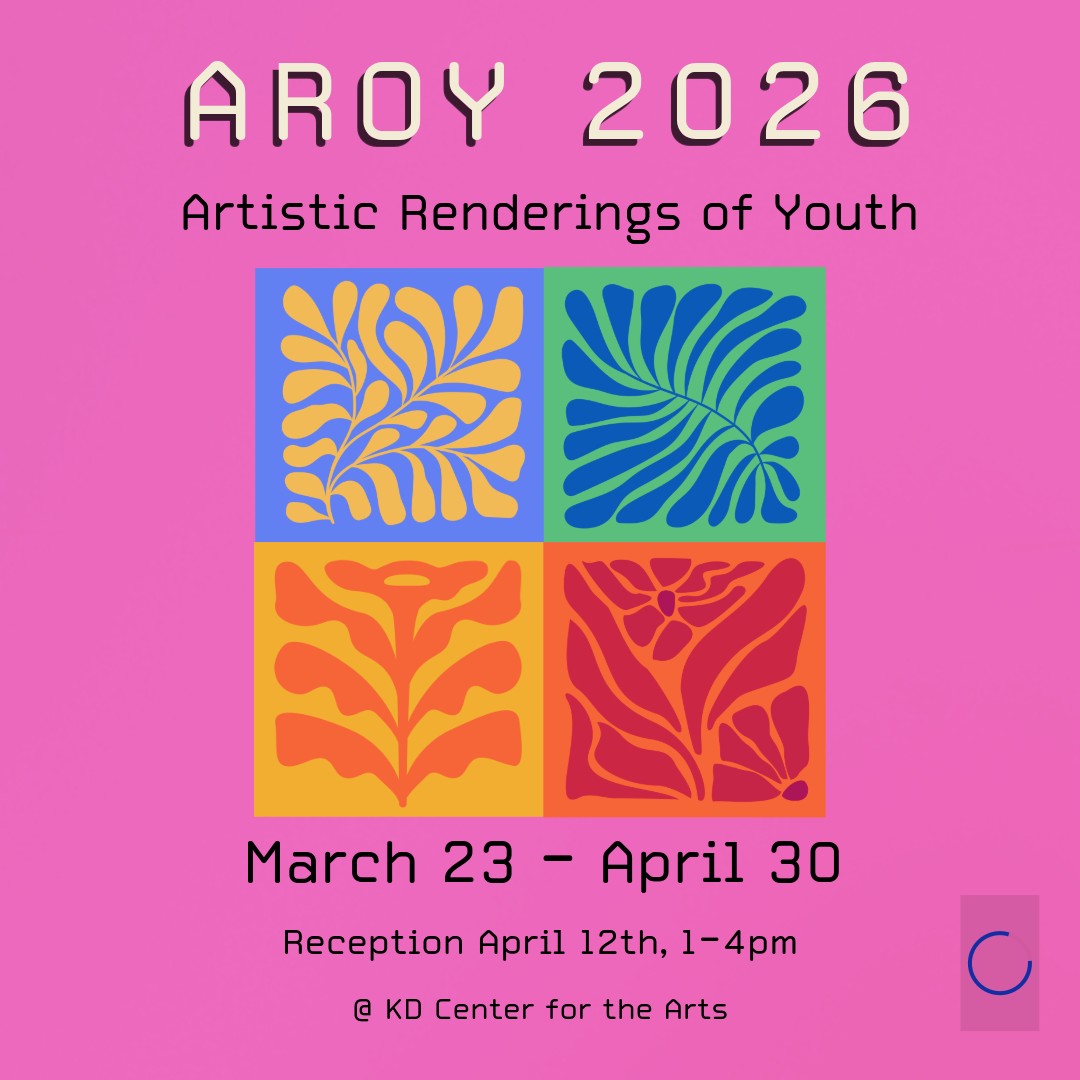
2026 Artistic Renderings of Youth
3.23.26 - 4.30.26
Founded by Florence art educators, Jerry Foster and Ronnie Riner, Artistic Renderings of Youth provides an opportunity for the community to discover the young artistic talent in our area. The competition is coordinated by middle school and high school art teachers to give students a chance to exhibit their artwork and receive recognition for their talent.
As a juried exhibition, students have the opportunity to receive awards such as the Jerry Foster Avante Garde Award, the Ronnie Riner Memorial Drawing Award, and scholarships from the University of North Alabama’s Visual Arts Department and School of the Arts. Ribbons are awarded in three grade divisions: Division 1, 7th and 8th grades; Division 2, 9th and 10th grades; and Division 3, 11th and 12th grades.
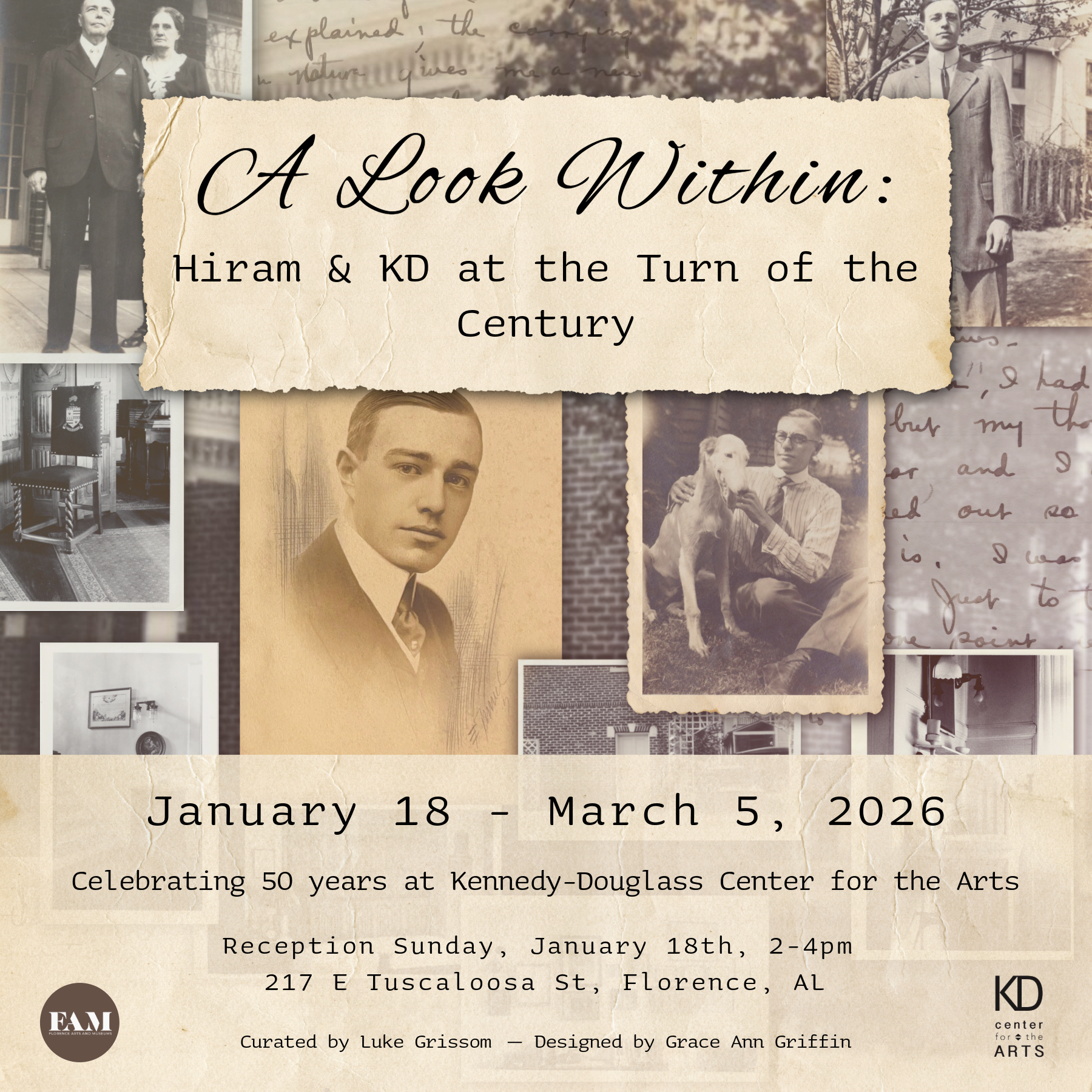
A Look Within: Hiram & KD at the Turn of The Century
Celebrating 50 years at Kennedy-Douglass Center for the Arts
In conjunction with the 50th Anniversary Celebration of the Kennedy-Douglass Center for the Arts, the KDAC is pleased to present A Look Within: Hiram & KD at the Turn of the Century beginning January 18, 2026, and continuing through March 5, 2026. This exhibition showcases the life of Reverend Hiram Kennedy Douglass through a collection of items from the Florence Arts and Museums’ Hiram Kennedy Douglass Collection. While known throughout his life as Reverend Douglass, FAM staff know him affectionately as “Hiram.” Organized by guest curator, Luke Grissom and with graphics designed by Grace Ann Griffin, the exhibit follows Hiram’s life chronologically, from his youth in Florence to his early career in the ministry. His generous bequest established the Kennedy-Douglass Center for the Arts out of his own family home—the home from where we now offer this intimate glimpse into his early life. All are invited to attend the opening reception that will be held 2-4pm on Sunday, January 18th.
Hiram Kennedy Douglass was born on August 21st, 1893, in Centre Star, Alabama, to Mary Sue Brooks Douglass and James Josephus Douglass. Hiram attended the college training program at State Normal School of Florence (what is now UNA) from 1900 to 1912. After graduating, he pursued a degree in Business Administration at Columbia University in New York City from 1913 to 1915. While working at White Door Settlement House in New York City, Hiram realized that a business career was not what he wanted in the long term; instead, he wanted one that directly helped those in need.
This reorientation drew him to explore a career in ministry through the Episcopal Church, despite his Methodist background. Hiram left Columbia in 1916 to pursue a degree at the University of the South in Sewanee, Tennessee. He received his Bachelor of Arts from Sewanee in 1919 and later earned his graduate degree at Oxford University in England that same year. Hiram returned to the United States in 1921 and was ordained as a priest on June 29th, 1922, at St. Luke's Church in Atlanta, Georgia.
In 1926, Hiram was appointed as rector of The Church of the Messiah in Detroit, Michigan, where he served until 1929. He returned to the south in 1929 to work as Chaplain of the Convent of St. Anne in Memphis, Tennessee. Hiram retired from the ministry in 1937 due to medical reasons and came home to Florence where he remained an active member of the community.
Upon his death in 1975, Hiram Kennedy Douglass donated his home, property, and many of his personal belongings, for use as a public cultural space. In 1976, the City of Florence took ownership of the home and property to make it a place to appreciate the arts, and the Kennedy-Douglass Center for the Arts first opened its doors. 2026 marks the 50th Anniversary of the KDAC, which now includes three historic houses dedicated to the promotion and celebration of the arts.
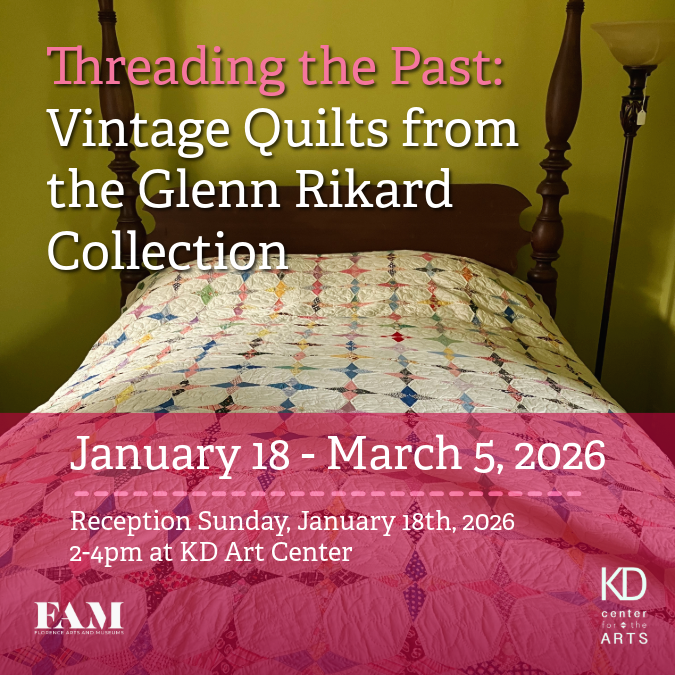
THREADING THE PAST: Vintage Quilts from the Glenn Rikard Collection
EXHIBIT: 1.18.26 - 3.5.26
RECEPTION: 1.18.26 @ 2:00pm
Inspired by the beautiful and intricate patterns made and quilted by his own family, Rikard began collecting quilts, patterns, and fabric by other artisans. His collection now numbers more than 150 quilts. With a focus on quilts dating from around the 1850s through the 1940s, the KDAC will showcase a small selection from Rikard’s private collection during the early winter months of 2026.
This exhibit highlights traditional quilt patterns and techniques, including an example of “Redwork”. Popularized in the 1870s, Redwork Quilts were named for the Turkey red thread created from the first colorfast dye, meaning the color would not bleed on adjacent patterns. Also on display is a quilt made from feedsacks that were commonly—and creatively—used during this period. These are just a couple of the many examples showcasing the beauty and ingenuity of early quilters’ artistry that visitors can look forward to in the coming months.